



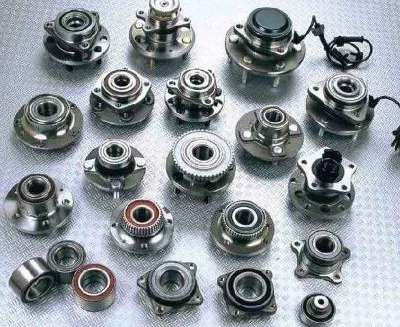
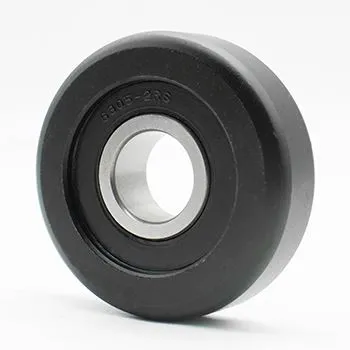


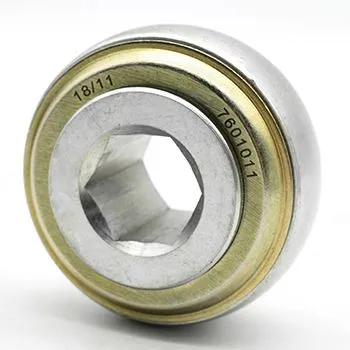

Bearings are known as the "joints of industry" and are widely used in various fields of the national economy and national defense construction. Today I will take you to learn about a common component in automobiles-universal joint bearings. The so-called universal joint bearing refers to a mechanical structure that uses spherical connections to realize power transmission on different axes. The combination of the universal joint and the drive shaft is called a universal joint transmission device.
Classification
The universal joint bearing ensures the basic operation of the car. On front-engine rear-wheel drive vehicles, the universal joint transmission device is installed between the transmission output shaft and the transaxle main reducer input shaft. On front-engine, front-wheel drive vehicles, the drive shaft is omitted, so the universal joint is installed between the front axle half-shaft and the wheel, which is responsible for both driving and steering.
Common faults and solutions
We know that bearings need regular maintenance to eliminate faults. The common faults of universal joint bearings are mainly the wear of the journal and bearing and the bending deformation of each journal, causing the center lines of the cross shafts to be not on the same plane, or the adjacent two shafts. The axis centerline is not vertical. Due to the excessive wear gap between the universal joint cross shaft journal and the bearing, the cross shaft shakes during operation, causing the center line of the transmission shaft to deviate from its rotation center line, causing the transmission shaft to vibrate and make abnormal noise during operation.
The wear of the universal joint cross shaft journal and bearing should not exceed 0.02~0.13mm based on the usage conditions, and is generally maintained at around 0.01mm. If it exceeds 0.13mm, the transmission shaft will vibrate and make noise. Wear is mainly caused by lack of lubrication, so regular maintenance is very important. Grease should be added frequently during daily maintenance to prevent wear of the cross shaft journal and bearings due to lack of grease.
Precautions during use
Finally, let's take a look at the precautions when using universal joint bearings. During disassembly, transportation, and storage, collisions and pressure stacking should be avoided; the sealing conditions of the intermediate support bearings, cross shaft bearings, and sliding splines should be checked frequently. Replace failed oil seals promptly. Frequently inject grease. In order for each bearing of the universal joint to be fully lubricated, the lubricating oil must be squeezed out from the oil seal of each bearing. Frequently check the radial and axial clearance of the intermediate support bearing, the axial clearance of the cross shaft, the matching clearance between the cross shaft and the bearing, the bearing and the universal joint fork hole, the circumferential clearance of the sliding spline pair, etc., to extend its service life. In fact, the use of any bearing requires following the operating instructions, regular maintenance, and timely repair or replacement if minor damage is found, so as to maximize the performance of the bearing.